
How Many Design Revisions and Prototype Samples Are Usually Included in Flask Product Development?
When developing premium flask products (like insulated water flasks, laboratory flasks, or custom - designed vessels) at Paiter Flask, the number of design revisions and prototype samples hinges on several factors—product complexity, market goals, user feedback loops, and quality standards. Let’s break down the typical ranges and why they matter.
1. Design Revisions: Balancing Iteration and Efficiency
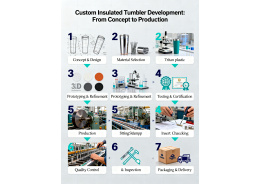
In the product development lifecycle for flasks (whether for everyday use, industrial, or specialized applications), design revisions typically fall between 3–8 iterations. Here’s what drives this range:
- Concept to Initial Design: The first 1–2 revisions focus on translating ideas (e.g., ergonomic grips, leak - proof lids, material sustainability) into a viable 2D/3D design. For Paiter Flask’s consumer - centric models, this often involves refining aesthetic details (shape, color, branding integration) and functional specs (insulation performance, durability).
- Feedback - Driven Iterations: After prototyping (more on that next), 2–4 revisions address real - world testing feedback. For example, a travel flask might undergo 3+ revisions to fix lid leakage, optimize weight distribution, or enhance heat retention based on lab tests and user trials.
- Regulatory or Technical Constraints: If the flask targets industries (e.g., medical, food service) with strict compliance (FDA, ISO), an extra 1–2 revisions ensure materials, safety, and performance meet standards.
Smaller, low - complexity flasks (e.g., simple single - wall tumblers) might settle at 3–5 revisions, while high - end, multi - feature models (smart flasks with temperature control, modular components) can require 6–8+ revisions to perfect every detail.
2. Prototype Samples: From Proof - of - Concept to Final Validation
Prototype samples in flask development follow a phased approach, with quantities varying by stage:
Proof - of - Concept (PoC) Prototypes
These early - stage prototypes (1–3 samples) test core functionality: Can the flask hold liquid without leaking? Does the insulation maintain temperature? For Paiter Flask’s R&D team, PoC samples use low - cost materials (3D - printed parts, basic metals) to validate key ideas quickly. If a new vacuum - insulation design is proposed, 2–3 PoC prototypes might test different seal mechanisms or wall thicknesses.
Functional Prototypes
Next, 3–5 functional prototypes refine details like ergonomics, lid usability, and material durability. These samples use production - grade or near - production materials (stainless steel, food - grade plastics) to simulate real - world use. For a new sports flask, this phase might involve 4 prototypes: one to test grip comfort, one for lid locking, one for drop resistance, and one for long - term insulation performance.
Design Validation & User Testing Prototypes
To gather user feedback and finalize design, 5–10 samples are often produced. These go to internal teams, beta testers, or focus groups. For Paiter Flask’s consumer products, 8–10 prototypes might be distributed to test aesthetics, usability, and brand alignment. Feedback here (e.g., “the lid is too stiff” or “the color feels outdated”) triggers the final 1–2 design revisions.
Pre - Production Prototypes
Before mass production, 2–5 pre - production samples confirm manufacturing feasibility. These are built on actual production lines (or near - identical setups) to test scalability, quality control, and cost efficiency. Any issues here (e.g., inconsistent powder coating, assembly delays) prompt last - minute design tweaks.
Across all stages, a typical flask development project at Paiter Flask might produce 10–25 total prototype samples, though complex projects (e.g., medical - grade flasks) could exceed 30 as compliance and precision demands grow.
Why This Range? Efficiency vs. Perfection
Too few revisions/samples risk launching a flawed product (e.g., a leaky flask or uncomfortable grip). Too many waste time and resources. At Paiter Flask, the 3–8 design revisions and 10–25 prototype samples balance:
- User - Centricity: Iterating based on real feedback to ensure the flask solves user pain points (e.g., easy cleaning, long - lasting heat).
- Technical Excellence: Validating materials, engineering, and manufacturing processes to meet Paiter’s quality standards.
- Time - to - Market: Streamlining iterations to launch innovative products without unnecessary delays.
For example, a new insulated coffee flask might start with 3 design revisions (concept → functional → user feedback) and 15 prototypes (3 PoC, 5 functional, 7 user testing) to finalize a design that’s leak - proof, comfortable, and on - brand.
Conclusion: It’s Not Just a Number—It’s a Process
At Paiter Flask, design revisions (3–8) and prototype samples (10–25) aren’t arbitrary. They’re a structured process to balance innovation, quality, and practicality. Whether developing a sleek everyday flask or a specialized lab vessel, each iteration and sample brings the product closer to exceeding user expectations. If you’re curious about our specific development process for a product, reach out—we’re happy to share more!

 English
 German
 French
 Russian
 Spanish
 Japanese
 Korean
 Portuguese
 Ukrainian
 Arabic
 Italian


